
How AI Will Transform Education Forever
Education is changing faster right now than at any time in the past century. Artificial intelligence is not just adding convenience — it’s redefining how students learn, how teachers teach, and how knowledge flows.
Instead of a single pace for 30 students in a room, learning is shifting toward personal, adaptive support available anytime, anywhere. The result: confidence grows, curiosity returns, and learning becomes something that feels built for each student.
This is the beginning of education that truly works for everyone.
Table of Contents
Personalized Learning That Adapts to You
For decades, classes have been forced to move forward whether students were ready or not. AI breaks the “one-size-fits-all” model by responding to each student’s needs in real time.
Adaptive learning systems can now:
- Identify confusion the moment it happens
- Change lesson difficulty automatically
- Offer multiple explanations until it clicks
- Help students learn in their own style
Studies show personalized instruction can improve comprehension by more than 30% compared to traditional pacing. Every student gets the exact level of challenge they need — no more guesswork, no more falling behind quietly.
Instant Help Builds Real Academic Confidence
When students struggle and there’s nobody to ask, anxiety builds and subjects get abandoned. AI gives them a private space to slow down, ask questions, and get answers instantly.
Benefits students are already experiencing:
- Step-by-step guidance instead of red X’s
- Ability to review concepts again whenever needed
- Encouragement to try rather than fear mistakes
According to recent education surveys, 68% of students who use AI study tools report higher confidence in class. Support is no longer limited by office hours.
Confidence becomes sustainable — not situational.
Teachers Gain Time to Teach, Not Just Manage
AI doesn’t replace teachers. It restores their time.
Automation helps remove the burdens that slow classroom progress, such as:
- Manual grading
- Worksheet creation
- Progress tracking and data entry
This gives teachers time for:
- 1-on-1 mentorship
- Emotional and social development
- Designing engaging lessons
- Helping students who need it most
AI handles the repetitive tasks. Teachers provide the human connection that nothing else can.
Education Looks More Like the Real World
Learning facts for a test is being replaced by learning how to use knowledge. AI brings real-world thinking into classrooms with:
- Interactive simulations
- Data-focused activities
- Scenario-based decision making
- Creative problem-solving tasks
Students aren’t just memorizing; they’re applying — the most valuable skill in every career.
Accessibility Becomes Universal
AI can provide support tailored to learning differences and language needs:
- Read-aloud explanations
- Visual guidance for complex topics
- Real-time translation
- Communication support for neurodiverse students
Opportunities expand. Barriers shrink.
Education finally starts meeting each student where they are — not asking them to adjust to a system that wasn’t designed for them.
Learning Doesn’t End With Graduation
Industries evolve constantly now. AI tools enable continuous education, letting people upgrade skills without going back to a classroom.
Whether someone is:
- Advancing a career
- Switching industries
- Exploring new passions
AI delivers guidance that fits busy adult lives. Learning becomes lifelong again.
Responsible AI Matters
There are challenges we must address:
- Protecting student data
- Preserving academic honesty
- Keeping humans in control of decisions
- Ensuring fair access and transparency
Responsible design allows AI to support understanding, not replace it.
Trust must grow alongside innovation.
What This Future Means for Students Today
Millions of students now carry access to personalized learning in their pockets. They get feedback on demand. They explore curiosity instead of suppressing it. They learn more efficiently — and more confidently — than ever before.
Education becomes:
- More human
- More personal
- More engaging
- More achievable
The goal isn’t to make school easier.
The goal is to help students become stronger thinkers.
Built by Educators. Powered by AI. Designed for Students.
Apex Vision AI is part of this transformation.
We help students:
- Understand homework, not just finish it
- Learn through instant, accurate support
- Stay productive with smarter study tools
- Build confidence in every subject
Thousands already use Apex Vision AI to turn confusion into clarity.
Try Apex Vision AI
Unlock answers, study insights, and a personalized learning experience built for modern students.
Start learning smarter today:
Visit apexvision.ai to get started
FAQ: AI in Education
Will AI replace teachers?
No. AI supports teachers by automating repetitive tasks so they can focus on human relationships and deeper learning.
Is using AI for homework cheating?
Cheating is copying without understanding. AI — when used responsibly — helps students learn why the answer is correct, not just what it is.
Does AI really help struggling students?
Yes. Instant feedback and personalized explanations make it easier to learn at your own speed, without embarrassment.
How does AI protect student data?
Quality education platforms follow strict privacy and data-security standards so student information remains safe.
About the Author
This article was written by the Apex Vision AI team, developers of real AI-powered learning tools used by students across the U.S. to improve academic performance and study confidence. We combine hands-on experience in ed-tech, AI engineering, and student support to build the future of education responsibly.
Struggling With Homework & Tests?
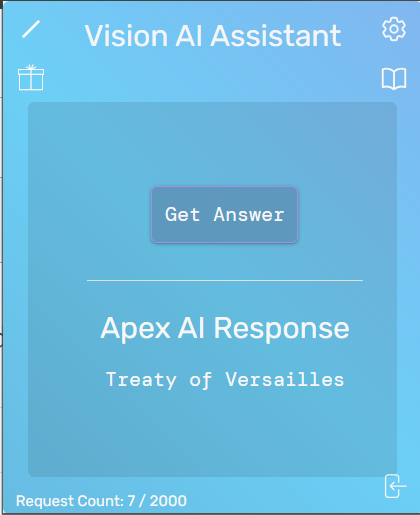
The AI Homework Helper Chrome Extension, created by students for students, provides instant and accurate answers for homework, quizzes, and tests, saving time and reducing stress with an easy-to-use interface and instant answers to MCQ’s.
1M+
Questions Answered
20k+
Hours Saved
50k+
Study Sessions
10k+
Happy Students
Technology
Apex Vision AI
Keywords: Apex Vision AI, Chrome Extension, AI Homework Help, Instant Answers, Multiple Choice Questions, Study Assistance, Student Tool, AI Technology, Education, Online Learning
Time to Read

